
Tame the Filter.
Scale the Index.
Unmanaged store filters generate millions of duplicate URLs, draining your crawl budget and tanking your rankings. eComHoard deploys forensic Faceted Navigation SEO to turn your filters from a technical liability into a high-converting long-tail traffic engine.
Commanding Architecture Across Enterprise Platforms
The "Spider Trap"
Is Drowning Your Rankings.
If your store allows users to filter by "Size," "Color," and "Brand," you have a faceted navigation system. What most eCommerce founders don't realize is that every time a user combines those filters (e.g., ?color=red&size=10&brand=nike), your store creates a brand new URL.
Left unmanaged, a store with 1,000 products can instantly generate **10 Million duplicate URLs**. This is known as "Index Bloat" or a "Spider Trap." Googlebot wastes its entire crawl budget scanning useless filter combinations instead of discovering your new, high-margin products.
Faceted Navigation SEO by eComHoard is the practice of **Algorithmic Governance**. We deploy precise technical directives (robots.txt, canonicals, noindex rules) to block Google from the junk, while surgically opening up specific filter combinations that capture highly profitable, long-tail search intent.
"Your filters should serve the user, not confuse the search engine. We build the technical architecture that satisfies both perfectly."
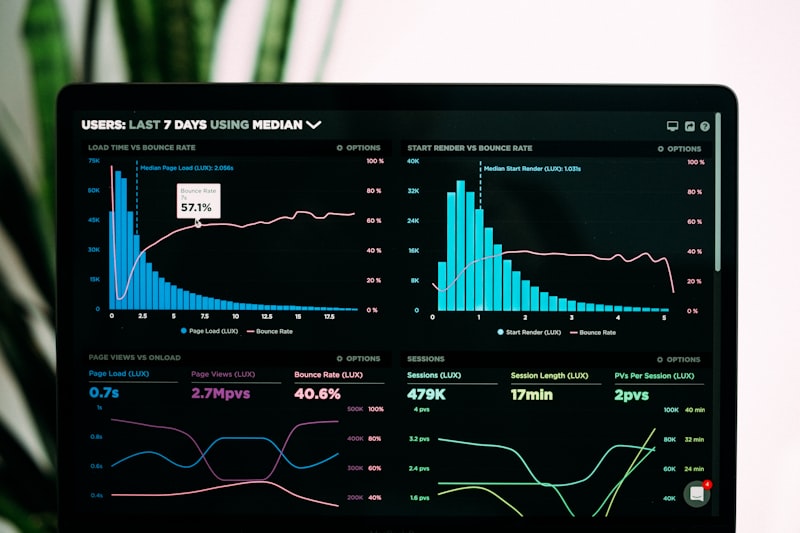
Reduction in Crawl Waste
Our Technical Governance Pillars
We manage the deep codebase architecture of your category sorting systems.
Crawl Budget Optimization
We deploy strict robots.txt directives and parameter blocking. We ensure Googlebot spends 100% of its time crawling your money-pages, not getting lost in endless price-sorting variations.
Focus: EfficiencyCanonical Forensics
We solve keyword cannibalization. We implement dynamic canonical tags that consolidate the ranking power of thousands of filtered URLs into a single, high-authority master category page.
Focus: Authority ConsolidationLong-Tail Extraction
We identify high-value filter combinations (e.g., "Mens Waterproof Running Shoes") and engineer them to be indexable, static URLs. We capture hyper-specific search intent automatically.
Focus: Revenue CaptureThe Architecture of Visibility: Mastering the Faceted Navigation Crisis
At eComHoard, our Faceted Navigation SEO Service tackles the most complex technical hurdle in the eCommerce industry. As your store catalog grows, your need for robust filtering increases to provide a good user experience (UX). However, the very tool that makes browsing easy for a human creates a labyrinth of catastrophic proportions for search engine algorithms. Understanding and controlling this environment is what separates 6-figure stores from 9-figure enterprises.
1. The Mathematics of Index Bloat and Crawl Waste
Google assigns a specific "Crawl Budget" to your domain—a limit on the number of pages it is willing to fetch and index within a given timeframe. Let's do the math on a standard apparel store. If you have a "T-Shirts" category, and you allow users to filter by 5 sizes, 10 colors, and 5 brands, the system can generate 250 unique URL combinations. Add a "Sort by Price" or "Sort by Rating" parameter, and that number explodes geometrically.
When Googlebot encounters this, it views every parameter permutation (e.g., example.com/tshirts?size=M&color=blue) as a distinct page. It begins crawling them all. Suddenly, your crawl budget is exhausted on 500,000 low-value filter pages. When you launch a new, high-margin product the next day, Google never sees it because it is too busy crawling the 800th variation of your "Blue T-Shirts" filter. eComHoard’s primary intervention is **Surgical Parameter Blocking**. Utilizing Google Search Console's URL Parameters tool (and modern equivalents like robust `robots.txt` logic and server-side rules), we instruct the algorithm to completely ignore non-value-adding sorting mechanics, instantly recovering your crawl equity.
2. Solving Keyword Cannibalization with Canonical Logic
If Google manages to index these filtered pages, an even worse problem emerges: **Keyword Cannibalization**. If a user searches for "Blue T-Shirts," Google looks at your site and sees 50 different URLs that contain blue t-shirts (sorted by price, rating, brand, size). Google doesn't know which one is the "Master" page. As a result, it splits your ranking authority across all 50 pages, guaranteeing that none of them rank on Page 1.
We deploy **Dynamic Canonicalization Frameworks**. This is a precise coding architecture that tells Google: "Yes, this URL exists for the user, but for ranking purposes, attribute all the SEO value to the Master Category Page." By consolidating your link equity, we build massive "Silo Authority," pushing your primary category pages to the top of highly competitive search results. We stop your own website from competing against itself.
The "Long-Tail" Exception Strategy
"While we block 95% of filter URLs, blocking them all is a mistake. If search volume data indicates that 'Women’s Black Leather Boots' is a highly profitable query, we don't block that filter. We engineer an 'Exception Rule.' We force the CMS to generate a static, optimized URL for that specific combination, inject custom H1 tags and meta descriptions, and index it. We block the noise, but we index the gold."
3. JavaScript/AJAX Implementation vs. HTML Links
The method used to load your filters fundamentally impacts your SEO. Many modern themes use JavaScript (AJAX) to load filter results without refreshing the page. While great for UX, if not coded correctly with History API pushState, Googlebot won't be able to "see" the filtered products, leaving valuable long-tail content completely invisible to the search index.
eComHoard’s technical SEO team conducts a **Render-Path Analysis**. We audit how your specific CMS (Shopify Plus, Magento, BigCommerce) renders filter results to Googlebot versus human users. If necessary, we rewrite the faceting logic to use standard `` href links for indexable long-tail categories, while utilizing fast JavaScript loading for non-indexable utility filters (like price sorting). This hybrid approach ensures you get lightning-fast user experience without sacrificing a single drop of SEO visibility.
4. Building the Enterprise SEO Moat
As your catalog scales from 1,000 SKUs to 100,000 SKUs, faceted navigation becomes the single most critical element of your digital architecture. An unmanaged faceted setup is the primary reason large enterprise stores suddenly lose traffic after a platform migration or a massive inventory expansion.
By partnering with eComHoard, you aren't just fixing a technical error; you are building an **Enterprise SEO Moat**. When Private Equity firms or strategic acquirers perform due diligence on your brand, a clean, highly optimized technical SEO architecture is a massive valuation multiplier. It proves that your organic traffic is stable, scalable, and built on a foundation that will not collapse during the next Google Core Update. At eComHoard, we engineer the technical perfection that turns your store from a storefront into an institution.
Structural Investment.
Transparent Technical SEO Architecture Plans
Project Plan
Best for one-time strategic tasks: Full "Index Bloat" forensic audit, mapping of Canonical tags for 1 core category, or robots.txt restructuring.
Flexi Hours
Best for ongoing technical management: Continuous crawl-budget monitoring, dynamic parameter tuning, and active long-tail filter indexation.
Growth Partner
For enterprise catalogs ready for total market dominance. We embed as your technical SEO architects managing the entire codebase. We win when you win.
Control Your
Architecture.
Is your technical foundation a maze that Google hates? Stop losing high-intent traffic to indexing errors. Our technical SEO architects are standing by to audit your codebase and build your structural roadmap today.
Technical Strategy Desk
info@ecomhoard.comOfficial Portal
ecomhoard.com/contact-us/Request Technical Audit
Confidential Response within 24 Hours